


The historical drama “Peterloo”, directed by the renowned filmmaker Mike Leigh, holds a special place in the history of British cinema. The film depicts the tragic events of the Peterloo Massacre, which occurred in 1819. Further details on manchester-trend.
“Peterloo” was selected for screening at the 75th Venice International Film Festival. Its premiere took place on 17 October 2018 at the BFI London Film Festival in HOME, Manchester. Director Mike Leigh expressed his joy at the premiere being held in the very city where the historical events unfolded.
A Story to Remember
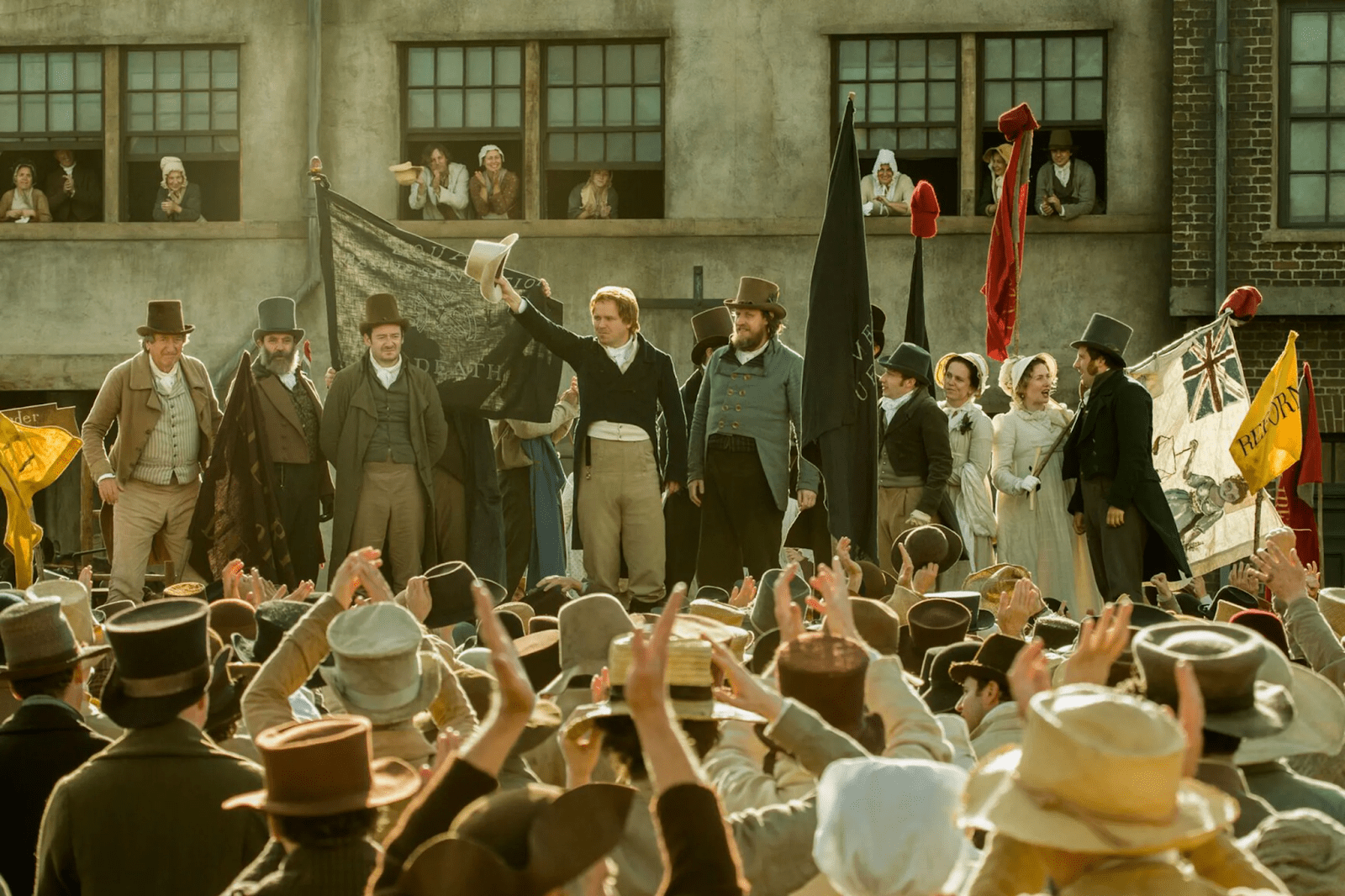
“Peterloo” is a British drama based on the historical events of the Peterloo Massacre, which occurred on 16 August 1819.
On that day, residents of Manchester and the surrounding areas gathered for a peaceful rally in support of democracy at St. Peter’s Field in Manchester. This gathering was the largest political meeting of the working class in British history, with around 60,000 people assembling to demand urgent reforms and improved living conditions.
The political and economic backdrop of these events was grim. Following the end of the Napoleonic Wars in 1815, Britain—and particularly industrial Manchester—faced a severe economic downturn marked by unemployment, crop failures from the “Year Without a Summer,” and the infamous Corn Laws, which kept bread prices artificially high. At that time, only 11% of adult men had voting rights. These factors drove a determined population to campaign for reform. A mass petition calling for male suffrage in 1817 collected three-quarters of a million signatures but was categorically rejected by the House of Commons. By early 1819, another economic slump reignited demands for change, particularly in industrial regions where the working class endured harsh living and working conditions. In August 1819, the Manchester Patriotic Union organised a large rally featuring radical speaker Henry Hunt, which tragically turned into a massacre.
Filming the Historical Drama
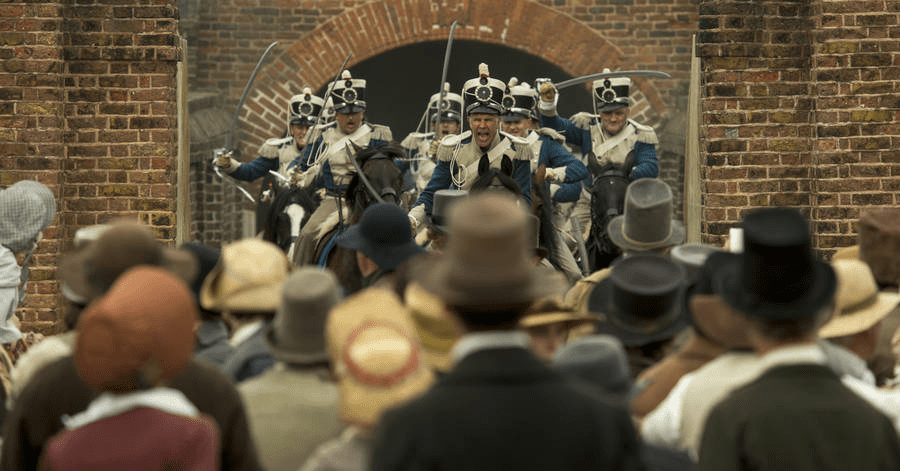
The choice of filming locations near Manchester was a deliberate decision by the production team to authentically recreate the historical setting. The selected sites helped immerse the audience in the era and the locale.
“Peterloo” was filmed at several locations, including Calderdale, West Yorkshire, at Heptonstall and Gibson mills, Hardcastle Crags, and Shibden Hall, with support from Calderdale Council. Other filming sites included Manchester itself, Gainsborough, Chester, Kent, Essex, Chatham, and Lincoln.
The Significance of the Film for Manchester
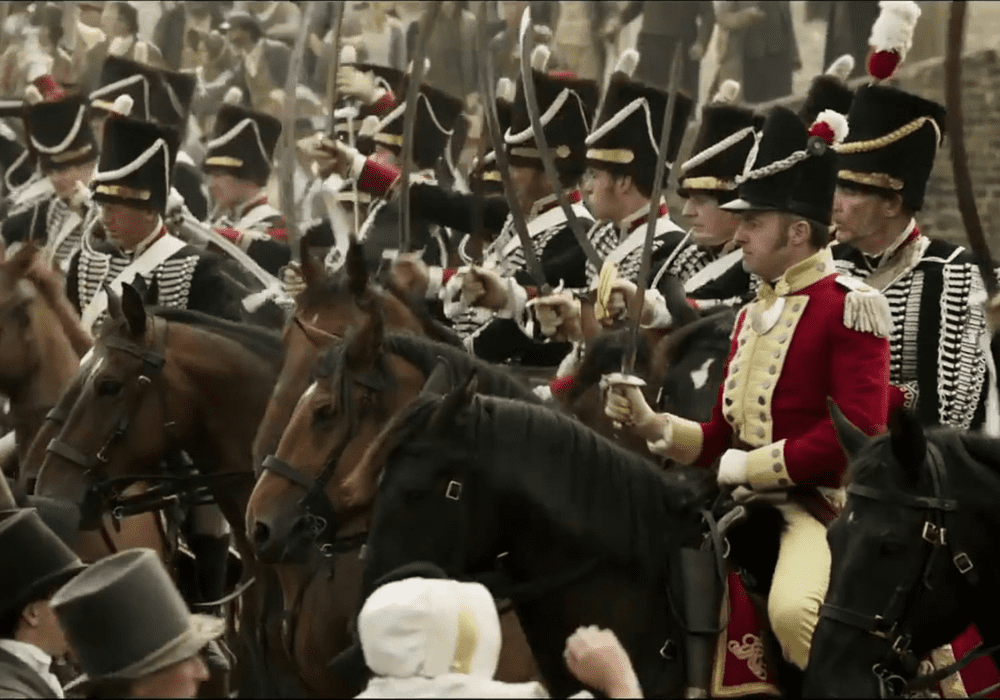
During the Peterloo Massacre, British government forces killed hundreds of peaceful protesters and injured many more. These individuals were expressing their desire for political reform to combat poverty. The massacre marked a defining moment in British democracy and played a key role in the founding of The Guardian newspaper.
The film “Peterloo” not only recounts historical facts but also vividly portrays the lives of people grappling with economic crisis and political oppression. Director Mike Leigh succeeded in presenting the struggle of the working class through personal stories and a broader socio-political context.
The film received critical acclaim for its historical accuracy, compelling performances, and the director’s ability to capture the political tensions of the time. “Peterloo” renewed interest in the events of 1819, encouraging viewers to reflect on the cost of democracy in the modern era.
The Peterloo Massacre symbolises Manchester’s enduring fight for social justice. Through films like “Peterloo”, this pivotal event is preserved in public consciousness, serving as a reminder of the sacrifices made for the freedoms enjoyed today.
Even in the 21st century, Manchester—a modern metropolis—maintains its historical roots through projects like “Peterloo”. The film vividly depicts a harrowing yet vital chapter in history, underlining the power of collective action and its role in shaping British society. Remembering these events is essential, as they form the foundation of many democratic institutions today.