


Oldham Coliseum Theatre is located in the centre of Oldham, in Greater Manchester. It has been an important part of the local and national theatrical scene for over a hundred years. During that time, the theatre has undergone many transformations, growing from a small establishment into a significant cultural and historical landmark. Learn more at manchester-trend.
History of the legendary theatre creation
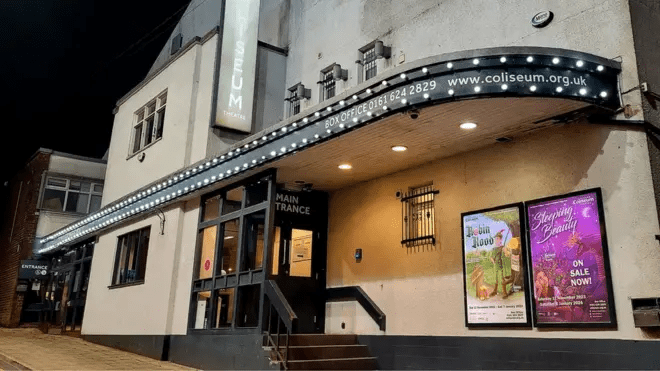
The history of Oldham Coliseum Theatre began in 1885. Then carpenter Thomas Whittaker built a wooden building as the permanent home for the Myer’s Grand American Hippodrome Circus on Henshaw Street. However, the circus’s owner couldn’t pay for the construction and the building went under Whittaker’s ownership. When the area on Henshaw Street was decided to be redeveloped for a market, the theatre was dismantled and moved to a new location, Fairbottom Street. There, it reopened in 1887 under the new name The Colosseum. Visitors were greeted by the Cullen’s Circus show on the opening day.
The building of the newly opened theatre was covered with fire-resistant paint, had a balcony with a loggia on the facade, separate entrances for different classes of spectators, bars and men’s and women’s cloakrooms. The stage was 42 feet (about 13 metres) wide, which made it one of the largest not only in the county but also in the entire country. In addition, the auditorium was equipped with a ventilation system. The circus horses were kept in a separate brick room and entered the stage through a special passage.
Development of the cultural centre
Shortly after its reopening, the theatre closed again. A few months later, in the same 1887, it welcomed guests again after receiving a special license. It opened with the production of The Two Orphans.
At the beginning of the 20th century, the theatre was passed to Peter Yates, the owner of the Yates’s Wine Lodges chain. Then Oldham Coliseum was converted into a music hall. Charlie Chaplin was one of the most famous performers to appear on its stage.
In addition, at the beginning of the 20th century, Oldham Coliseum started to screen short films.
The theatre changed hands again in 1918. That time, it was passed into the ownership of Dobie’s Electric Theatres. In 1931, William Cedric Bailey bought the building and converted it into the Colosseum Super “Talkie” Theatre. During the reconstruction, the stage was dismantled, a projector was installed and the facade was modernised. Thus, the theatre lost its former glory and was completely turned into a cinema. The new institution opened its doors in 1931 with the screening of the Two Worlds film. Unfortunately, the cinema wasn’t as successful as it had been as the theatre, so it was closed that same year.
After an auction, which sold off the equipment, scenery, props and costumes, the former theatre reopened in 1931, showing American films. However, it was also unsuccessful and the place finally ceased to operate in 1932.
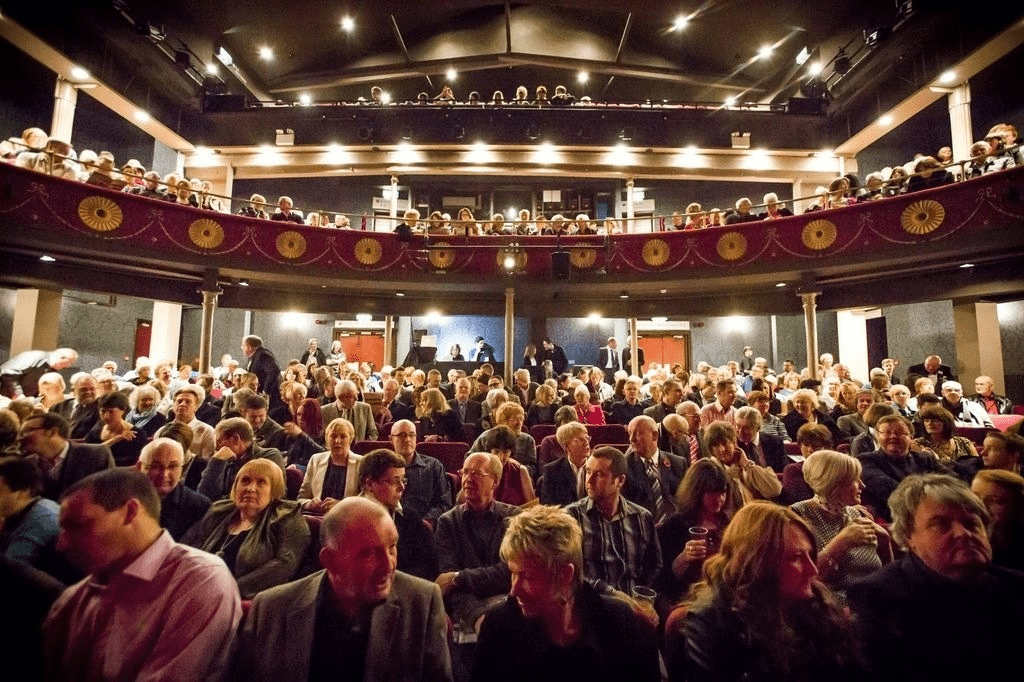
The theatre remained abandoned until 1939 when it was leased to the Oldham Repertory Theatre Club, which carried out significant changes. In particular, its facade was renovated according to the design of architects Armitage and Fazakerly. The venue acquired new dressing rooms on the site of the former stables and part of the auditorium was converted into a stage. The seating capacity was reduced from 3,000 to 670.
Thus, in 1939 the theatre reopened under the new name, the Coliseum Theatre. At first, it worked as a theatre club but later became available to the general public.
Between 1964 and 1966, the building underwent renovation. It included replacing the wooden structures with stone, removing the projector, updating the stage portal, installing a protective curtain and modernising the facade. A new fly tower and an orchestra pit were built in 1974.
In 1977, the theatre was passed into the ownership of Oldham Council, after which it was reopened as a cultural centre.
Challenges of the 21st century
In 2012, Oldham Coliseum was added with a new extension housing an educational studio and a cafe-bar. The theatre worked successfully until Arts Council England decided to stop funding the institution in 2022. It was the largest regional theatre to lose state support.
In 2023, the theatre was closed and the board of trustees declared that its further maintenance was financially impossible. Initially, the city authorities wanted to demolish the historic building and build a new smaller theatre in its place worth £24 million. However, thanks to an active campaign led by actress Julie Hesmondhalgh, in 2024, it was announced that the legendary building wouldn’t be demolished but restored. £10 million has been allocated for this and the theatre is planned to reopen by Christmas 2025.
Interestingly, Oldham Coliseum is said to be haunted. In 1947, there was a tragic incident during a performance. Actor Harold Norman, who played the leading role, was wounded by a real sword in a fight scene. Shortly after that, he died of peritonitis. They say that he didn’t adhere to the traditional superstitions associated with this play and his ghost haunts the theatre, usually appearing every Thursday, the day he has been fatally wounded.