


The Manchester Opera House, located on Quay Street, is an important part of the city’s cultural life. Since its opening in the early 20th century, it has undergone many changes but has always remained a place of flourishing art. Learn more at manchester-trend.
Brief history
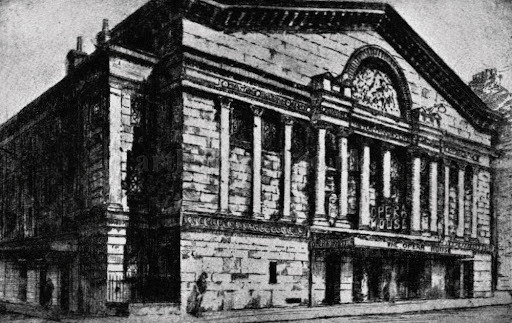
The history of the Manchester Opera House began in the early 20th century, in particular, in 1912. Then the venue first opened its doors to visitors as the New Theatre. In 1915, it was renamed the New Queen’s Theatre and received its current name, the Opera Theatre, only in 1920.
It held various musicals and revues. Over the many years of operation, the theatre stage hosted a wide range of productions, from dramatic plays and musicals to opera performances and pantomimes.
The theatre building is a real architectural wonder of the early 20th century. It is rectangular, built of plastered brick and has a slate roof. Its facade is made in the classical style and features 15 bays, the central five of which are decorated with fluted Ionic columns. Three central bays are crowned with a relief depicting a horse-drawn chariot within a semi-circular arch. The pediment is decorated with a stucco cornice on brackets and the entrance canopy.
The auditorium has two curved cantilevered balconies with wide overhangs, each of which could accommodate up to 500 spectators. On both sides of the stage are boxes lying between pairs of fluted Corinthian columns. The high proscenium arch is decorated with a round medallion depicting gryphons. The ceiling of the hall is made in the form of a coffered segmental vault.
The stage is 42 feet (13 m) deep and 37 feet (11 m) wide. The orchestra pit is designed for 80 musicians. The theatre’s total seating capacity is 1,920 seats. In March 2011, the building was renovated, while its auditorium retained its traditional green and gold colour palette.
The Manchester Opera House building is a Grade II listed building.
Development of the Manchester Opera House
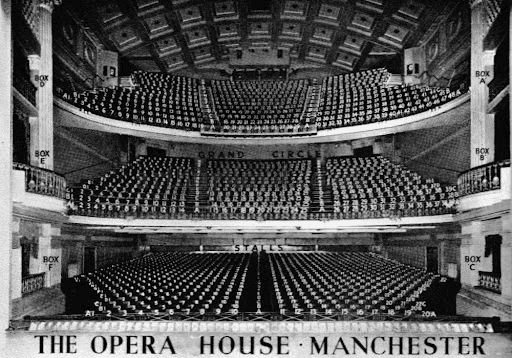
Since its opening, the Manchester Opera House has hosted touring musicals, ballet, concerts and Christmas pantomimes. Some of the most famous shows as well as world and European premieres have taken place here.
However, the venue had its ups and downs. Thus, the mid-20th century brought challenges — the rise of cinema and changing tastes in entertainment led to a temporary stagnation of opera in Manchester. In 1979, the Opera House closed completely and its building was used for playing bingo. It continued for five years until the Palace Trust bought the legendary Manchester Opera House and restored its original purpose.
In 1990, the venue became the property of Apollo Leisure and started to host large-scale musicals and world premieres. The popularity of opera and musical theatre grew again. The Opera House staged a variety of productions, from traditional operas to modern musicals, reflecting the changing tastes of the audience. That period was also marked by cooperation with international companies, which diversified the theatre programme. In 2009, the institution was sold to the Ambassador Theatre Group. In March 2020, the Opera House and the Palace Theatre were granted Charitable Incorporated Organisation status.
Manchester’s commitment to opera and the performing arts has remained unwavering throughout the 20th century. The Opera House has played a key role in nurturing and showcasing talent, adapting to changing times and enriching the city’s cultural heritage.
Modern times
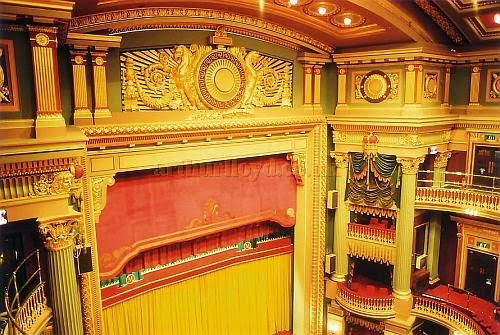
In the 2020s, the Manchester Opera House continues to host a diverse range of performances, from West End musicals to concerts and comedy shows. Its ability to adapt while retaining its historic essence makes it a real treasure of Manchester’s rapidly evolving cultural scene.
Performances at the Manchester Opera House aren’t just shows, they are also a reminder of the long history and love of the arts in the industrial heartland of Britain.
Many talented performers continue to work and create here, maintaining a high standard and attracting audiences of all ages and interests. The theatre remains an important cultural centre, where art meets history, creating a unique atmosphere for every visitor.
In the 21st century, the Manchester Opera House hosted such legendary performances as
- the Gorillaz concert in 2005
- the world premiere of Ghost The Musical in 2011
- the UK premiere of Dolly Parton’s musical 9 to 5 in 2012
- the world premiere of Bat Out of Hell: The Musical in 2017
- the world premiere of the musical & Juliet in 2019
- the legendary world premiere of Back to the Future: The Musical in 2020
- the UK premiere of the musical Mrs. Doubtfire in 2022
- the world premiere of the film I Should Be So Lucky in 2023
- and the world premiere of the musical Burlesque in 2024.
The Manchester Opera House continues to thrive and welcomes tens of thousands of local and international visitors each year.