


The Palace Theatre is the central object and the main cultural asset of Manchester. In this article, we will tell you about its rich history of formation and development, from the opening Cleopatra ballet to the modern tour of Hamilton. Learn more at manchester-trend.
Foundation of The Palace Theatre
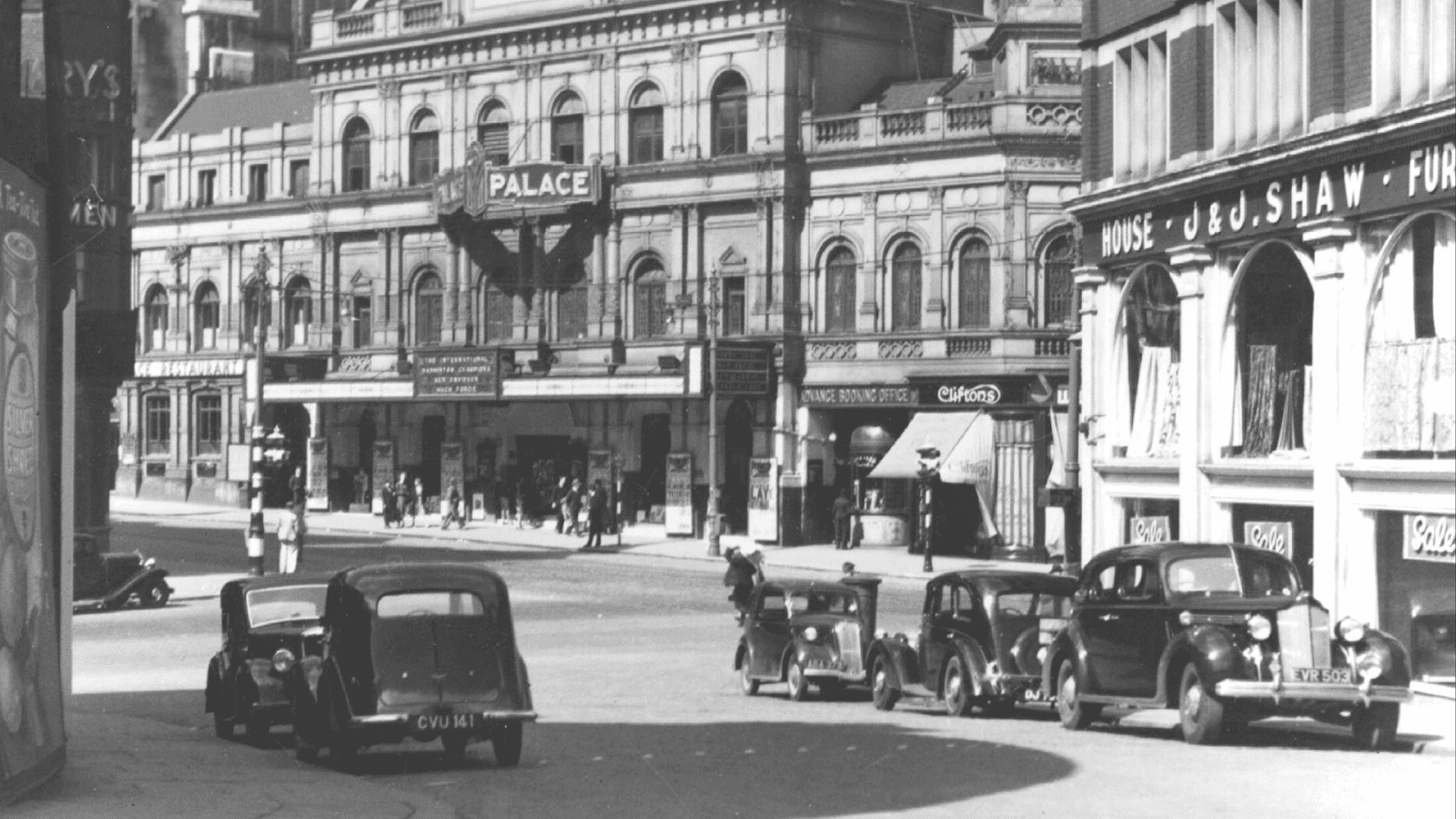
The Palace Theatre has a rich and varied history. It was opened on Oxford Street in Manchester on a warm May day in 1891. However, initially, it was called The Grand Old Lady of Oxford Street.
Its building was designed by the legendary British architect Alfred Darbyshire. The construction project cost a considerable amount for that time of £40,500. It was a large and very spacious theatre complex that could accommodate more than 3,000 people, but it didn’t work for long.
The Palace Theatre reducing the number of seats
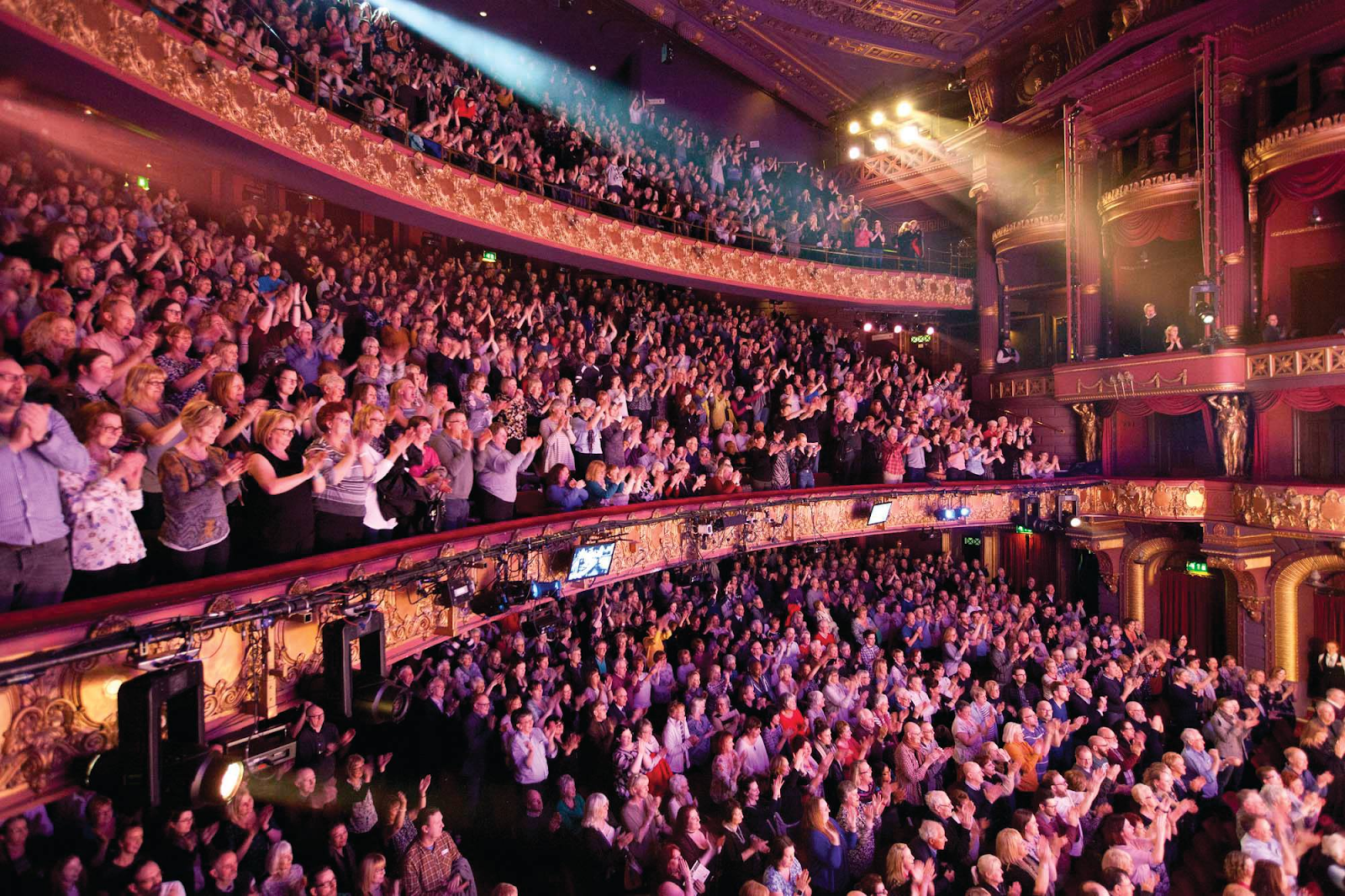
In 1896, the theatre needed reconstruction. Architect Frank Matcham was responsible for improving the theatre. Another expansion of the theatre by the same architect took place in 1899. Then it acquired a pass door and underwent minor alterations and restoration.
However, it was far from the end of the changes and reconstructions. The next reconstruction took place in 1913. At that time, architect Bertie Crewe undertook a major renovation of the interior. In addition to restorations, the number of seats was reduced to 2,600. The reason was the increasing number of new cultural institutions in Manchester, so the maintenance of a theatre with more than 3,000 seats became unprofitable.
A terrible event in the history of the theatre occurred during the Second World War, namely in 1940. The legendary Manchester theatre was directly hit by a German bomb during the Manchester Blitz. Thus, the central landmark, one of the most visited places at the end of the 19th century and the beginning of the 20th century, was in ruins. The theatre wasn’t restored for a long time because cultural recreation wasn’t one of the primary needs of wartime.
Another capital change of The Palace Theatre took place in the 1970s. In addition, the question of its closure arose acutely at that time. Then the number of seats was reduced to slightly more than 1,000. In the 1980s, another overhaul of the interior was carried out.
The theatre went through a difficult path of development and formation. It was repeatedly expanded and modernised, and was even completely destroyed by a German bomb. It should be noted that at the end of the 19th century, the number of seats in The Palace Theatre was 3,675, and during the last reconstruction, their number was reduced to 1,955.
The Palace Theatre has always been a majestic building and the main landmark of the city. In addition, it has always been considered one of the largest and best-equipped theatres outside of London.
In the 21st century, The Palace Theatre hosts some of the largest touring musicals featuring world-famous stars, popular performances, operas and ballets. In addition, visitors can watch comedies and one-day concerts here too.
Famous productions at The Palace Theatre
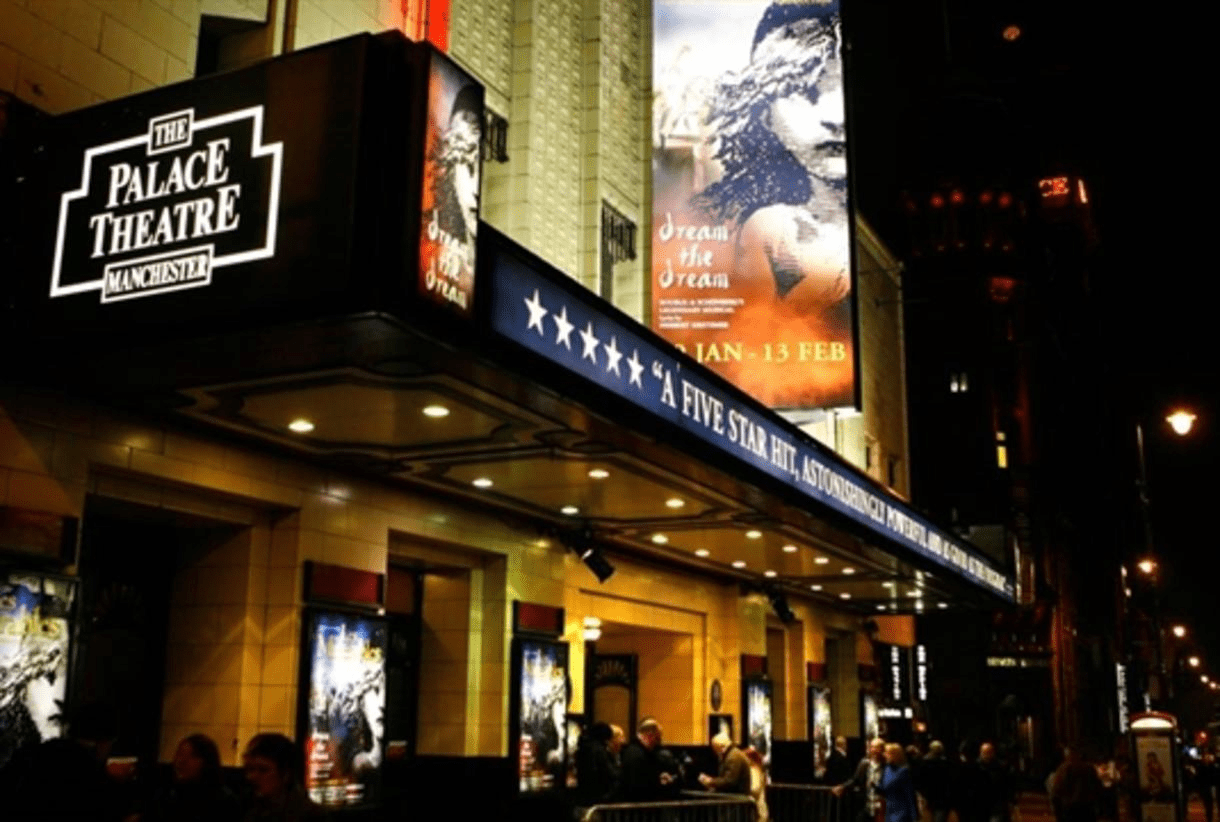
The theatre has presented hundreds of different productions throughout its history. The first one was staged on the opening day in 1891. It was a ballet called Cleopatra. On the first day of its operation, the theatre gathered a large audience, but, unfortunately, the performance didn’t become very popular among the residents and visitors of Manchester. Therefore, the theatre had to expand its repertoire and include more famous performers. At the beginning of the 20th century, it achieved stunning success, becoming a real cultural landmark of the city. Every day, local residents and visitors from other UK cities were trying to get tickets to wonderful productions.
In the 21st century, The Palace Theatre became even more famous because it hosted a popular Broadway and West Indian musical called The Producers.
Other well-known productions held at The Palace Theatre in the 20th-21st centuries are
- Les Misérables
- Miss Saigon
- Chitty Chitty Bang Bang
- Mamma Mia!
- The Wedding Singer
- and Rufus Wainwright’s opera Prima Donna.
The Palace Theatre has been the centre of Manchester’s cultural image for many years. It has survived many reconstructions and even German bombing. Nevertheless, it was restored and continued to receive visitors. In the 21st century, The Palace Theatre remains the main theatre in Manchester. Its ornate building is a gem of Oxford Street and the city as a whole.