

“The Victoria Theatre,” located in Salford, Manchester, boasts a rich and storied past. It stands as a symbol of cultural heritage and the fragile nature of architectural landmarks. From its heyday as a thriving entertainment hub to its decline and multiple efforts at restoration and preservation, “The Victoria Theatre” tells a fascinating story. What was this iconic venue, and what became of it? Read on at manchester-trend.
The Creation of “The Victoria Theatre”
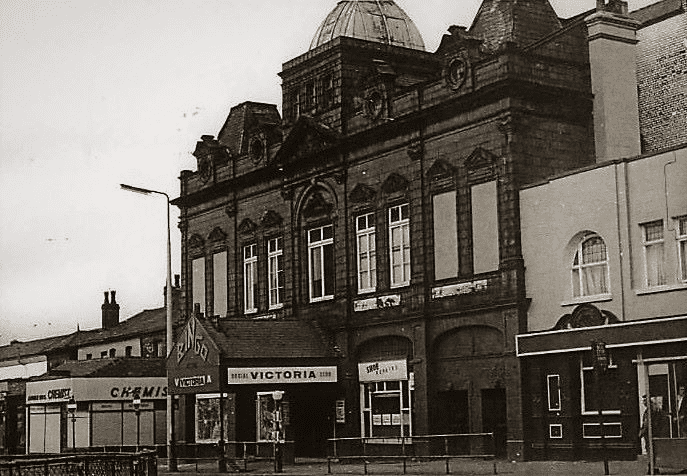
Designed by Bertie Crewe and built by The Broughton Theatres Syndicate Ltd, the foundation stone for The Victoria Theatre was laid in 1899. At the time, the construction of such a venue was seen as a way to promote rational entertainment, which was deemed essential for a harmonious society.
The theatre opened in 1900, accommodating up to 2,000 people. It premiered with The Sign of the Cross, performed by William Greet’s company. The building’s red terracotta façade with Ionic pilasters, along with its intricately decorated marble mosaic flooring and hand-painted ceiling in the foyer, epitomized Edwardian elegance. The spacious stage, measuring 74 feet wide, 40 feet deep, and 50 feet high, made it one of the most notable cultural establishments of its time.
From Theatre to Cinema
By the late 19th and early 20th centuries, Manchester’s cultural sphere was evolving rapidly. The advent of cinema marked the beginning of a new era, and many theatres and music halls began hosting film screenings.
While originally built for live performances and variety shows, The Victoria Theatre quickly adapted to the changing tastes of local audiences. By autumn 1901, it started showing films, and by 1913, it was officially licensed as a cinema. The seating capacity was expanded from 2,000 to 3,000 by 1910. Despite the growing popularity of cinema, the venue reverted to hosting theatrical productions exclusively between 1917 and 1919.
After another renovation in 1919, which introduced a revamped auditorium, decorative artwork, and a Tudor-style café, the theatre resumed operating primarily as a cinema. It continued this role until its closure in 1958.
What Happened to “The Victoria Theatre” After Its Closure?
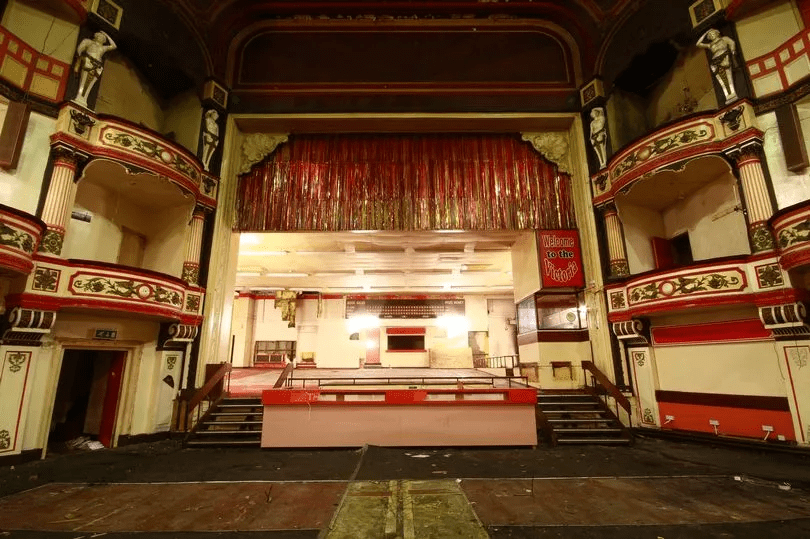

In the first half of the 20th century, The Victoria Theatre played a vibrant role in Salford’s social fabric. It hosted everything from live performances and musicals to silent films and eventually talkies. Its central location made it a popular gathering spot for residents seeking cultural entertainment.
However, by the mid-20th century, the rise of television significantly impacted attendance at The Victoria Theatre.
After its closure in 1958, the building found various temporary uses. It became a clothing and furniture store and, in the 1960s, hosted repertory theatre performances and pantomimes. Despite several attempts to restore the theatre, high costs prevented these efforts from succeeding.
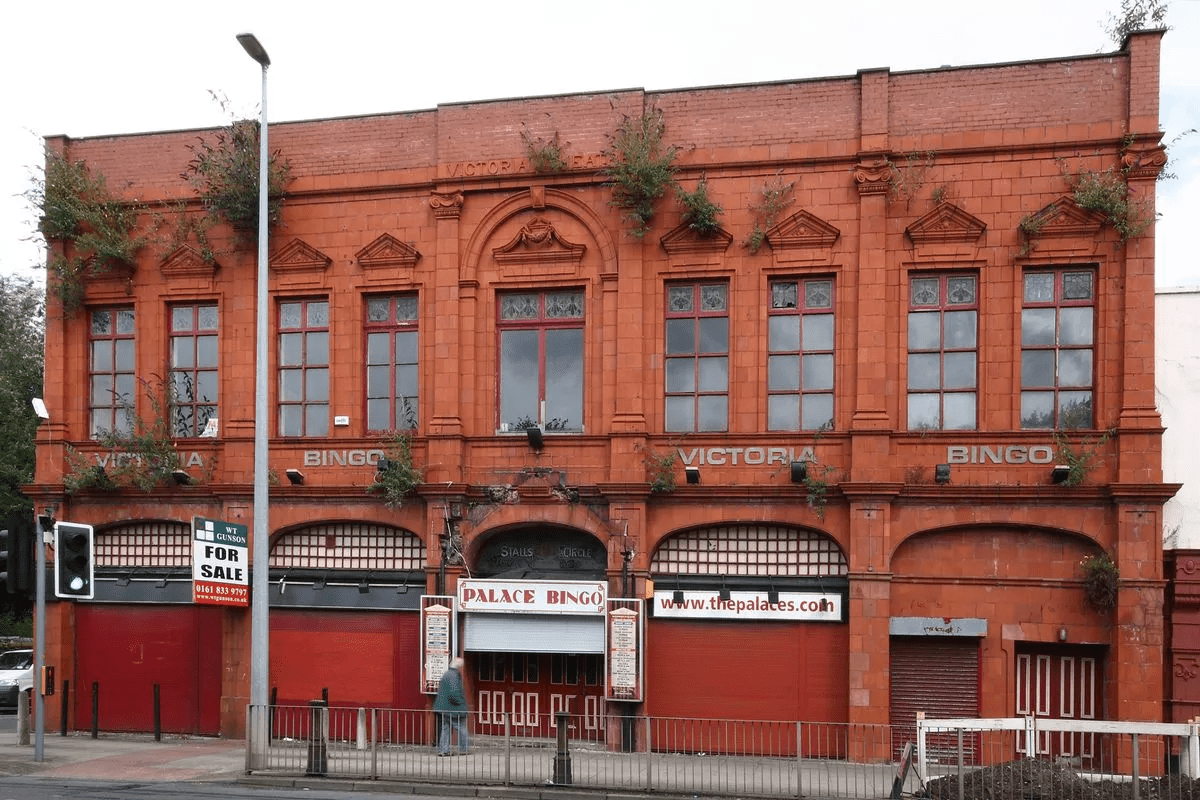
In the 1970s, the theatre briefly operated as a bingo hall, though this venture also failed. The building remained vacant until the 1980s, when another attempt at running a bingo hall succeeded. Bingo games were hosted in The Victoria Theatre until 2008, after which it closed again.
In 1980, the theatre was designated a Grade II listed building, recognizing its cultural and architectural significance. However, its original design suffered significant alterations, including the removal of its third floor, which was replaced by a plain brick wall.
In 2008, after the bingo hall closed, Palatial Leisure Limited began repairs to the roof, but the façade remained neglected. By 2012, the building was put up for sale at £275,000 and listed as an endangered heritage site in urgent need of restoration. That same year, the Save the Victoria Theatre Salford group was formed to raise awareness and support for preserving the theatre.
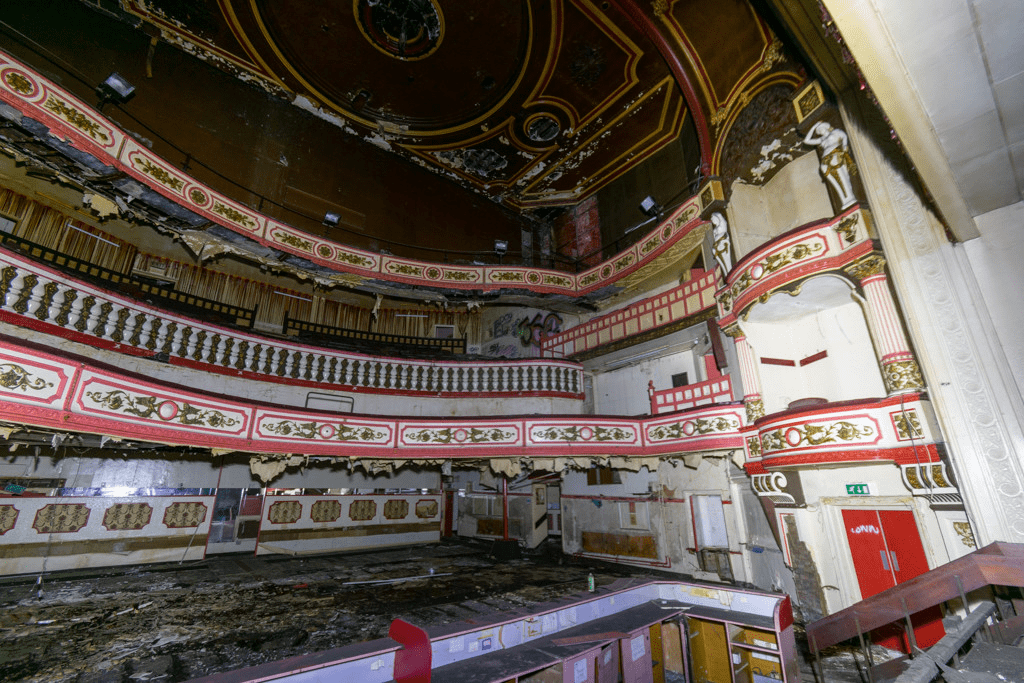
In 2013, the group established a trust with plans to purchase, restore, and reopen the theatre. However, insufficient funds and the building’s deteriorating condition hindered progress. In 2017, with support from local authorities, efforts resumed, but in 2018, the theatre was listed for auction at £350,000. This sparked a campaign to designate the building as an asset of community value, aiming to prevent its potential demolition, a possibility mentioned in revised city plans.
Despite its disuse for its original purpose, The Victoria Theatre remains a cultural icon for Salford and Manchester. Its transformation over the years and ongoing preservation efforts highlight its importance as a historical landmark and a testament to the city’s rich cultural history.
Sources
- https://database.theatrestrust.org.uk/resources/theatres/show/1829-victoria-theatre
- https://www.theatrestrust.org.uk/how-we-help/theatres-at-risk/177-victoria-theatre
- https://www.manchestereveningnews.co.uk/news/its-fantastic-building-currently-being-28076522
- https://www.urbandonedteam.com/reports/victoria-theatre
- https://salfordvictoria.co.uk/files/salvicfriends2.pdf
- https://www.aworldinruins.co.uk/victoria-theatre-salford-urbex