


Although Manchester has long been known as an industrial city, its theatrical life has always been an integral part of its identity. With a rich and vibrant history, the Royal Theatre holds a special place in the city’s cultural heritage. Once a grand symbol of Manchester’s cultural wealth, the theatre was tragically destroyed by fire in 1844. This iconic venue was a beacon of Victorian elegance and a hub for the flourishing artistic scene of its time. Home to numerous plays, operas, and performances that captivated audiences for decades, its story remains a poignant chapter in Manchester’s history. Next on manchester-trend.
The Origins of the Royal Theatre
It’s worth noting that Manchester had several “Royal” theatres over time. Many are familiar with the iconic story of the Theatre Royal, but before its establishment, there were other Royal Theatres. The first was opened in Spring Gardens in 1775 and operated until the lease expired in 1807. A second Royal Theatre was established on Fountain Street in 1807, only to meet its untimely end in the fire of 1844. This article focuses on the latter.
The Theatre’s Popularity
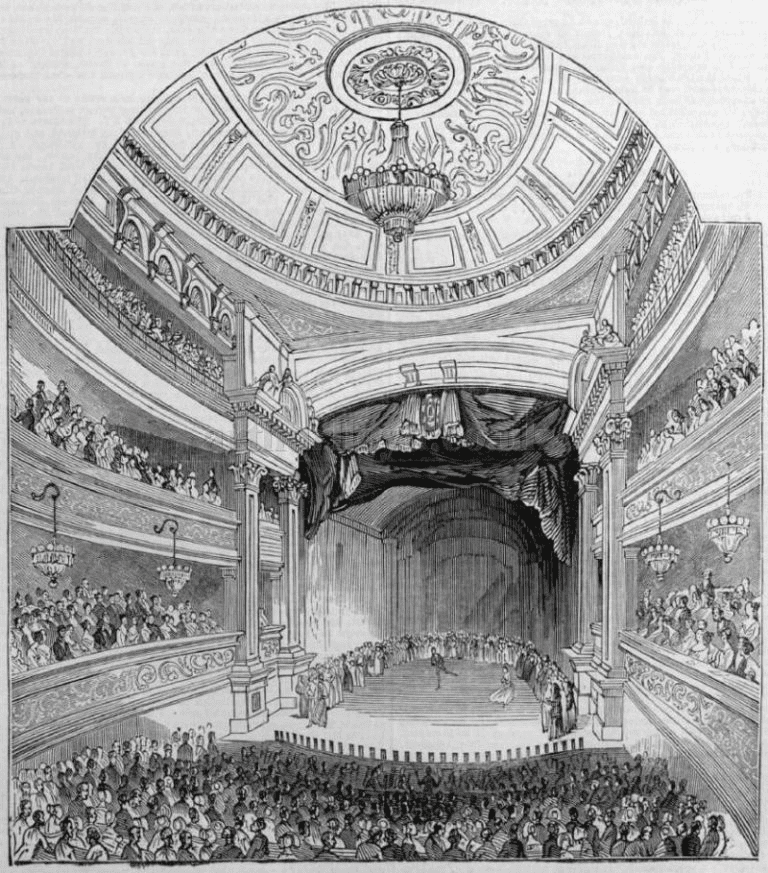
In the 19th century, theatres were among the most popular venues for leisure in Manchester, and the Royal Theatre was no exception. It became a gathering spot for the city’s elite and featured some of the most renowned actors and productions of the era, including pantomimes, operas, and plays. The architecture of the theatre was equally impressive, featuring an intricate design, luxurious interiors, plush seating, and a grand stage. For many, it offered a chance to escape into the worlds of drama and music.
More than just a place of entertainment, the Royal Theatre was a community hub where Manchester’s citizens came together to discuss art, current events, and politics. Its diverse programme catered to a wide range of tastes, from lavish productions with elaborate sets to intimate performances, making it a versatile space that adapted to the evolving preferences of its audience.
The Tragic Fire
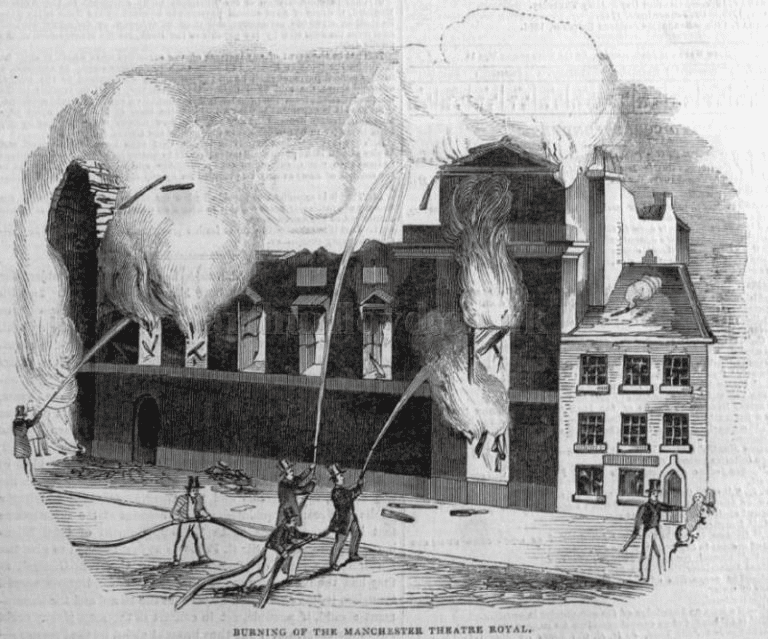
Unfortunately, the theatre’s success was abruptly halted by tragedy. On the morning of 7 May 1844, a fire broke out, consuming the building within an hour. The construction materials used in the theatre’s design were highly flammable, making it impossible for firefighters to save the structure. While no lives were lost, over 120 theatre employees were left jobless. The community rallied to support them, raising funds for their sustenance.
The destruction of the Royal Theatre dealt a heavy blow to Manchester’s cultural scene. The theatre was more than just an architectural marvel—it was a cherished part of the city’s history and legacy, a space where memories were made, and audiences experienced the magic of live performances. Its loss left a significant void in the hearts of residents and the city’s cultural fabric.
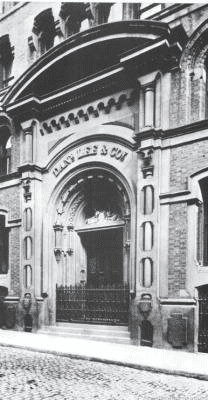
Adding to the tragedy, the insurance company refused to finance the reconstruction of the theatre. Instead, they offered monetary compensation on the condition that the theatre would not be rebuilt on Fountain Street. The site was eventually converted into a warehouse, generating profit for the insurers.
The Theatre’s Continued Legacy
Despite the fire, the Royal Theatre’s company continued to perform. On 25 May 1844, they gave a spectacular performance of Oliver Goldsmith’s play She Stoops to Conquer at Cooke’s Circus.
The following year, on 29 September 1845, the Royal Theatre found a new permanent home on Peter Street. Here, the company resumed their theatrical performances, shows, balls, and other social events until the theatre’s closure in 1921. After its closure, the building was repurposed as a cinema. Despite the change, it continued to serve as a cultural gathering place, preserving the spirit of its theatrical heyday.
The Royal Theatre in Manchester was more than just a performance venue; it was a cultural centre that played a vital role in the city’s history and the development of theatrical art. Its tragic destruction is a dark chapter in Manchester’s story, but it only ended the building itself. The theatre’s spirit endured through its troupe, who continued to perform, bringing new productions, operas, concerts, and balls to life until its eventual reorganisation. Today, the theatre remains a significant part of Manchester’s cultural heritage, reminding us of the resilience and enduring power of art.
Sources
- https://www.manchestertheatrehistory.co.uk/2021/05/17/fire-destroys-a-manchester-theatre-1844/
- https://trove.nla.gov.au/newspaper/article/27448050
- https://www.printsandephemera.com/ourshop/prod_5544520-Destruction-of-the-Manchester-Theatre-Royal-by-Fire-1844.html
- http://www.arthurlloyd.co.uk/ManchesterTheatres/TheatreRoyalManchester.htm