


The early 20th century marked a period of significant social change in Manchester and across the UK, with the suffragist movement playing a pivotal role in this transformation. This era of reform deeply influenced every aspect of urban life, including the theatrical scene. The Chaplin sisters—Nellie, Kate, and Mabel—were not just talented dancers and musicians; they became influential figures in the theatre world, championing women’s rights. Their performances left an indelible mark on both the entertainment industry and the suffragist movement. Next on manchester-trend.
Who Were the Chaplin Sisters?
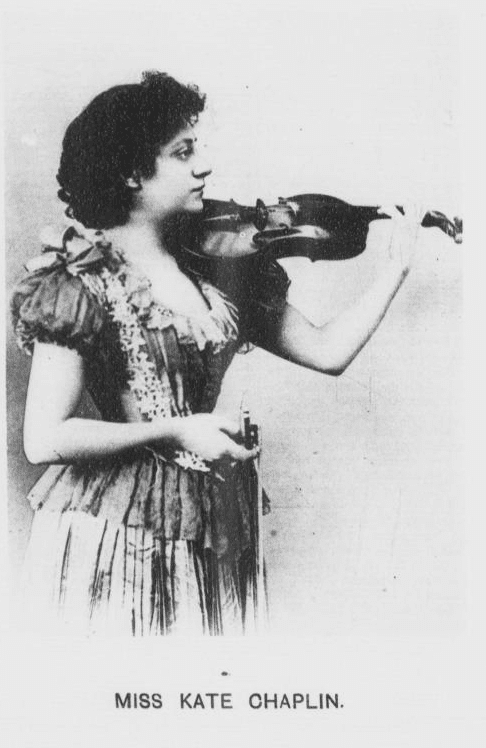
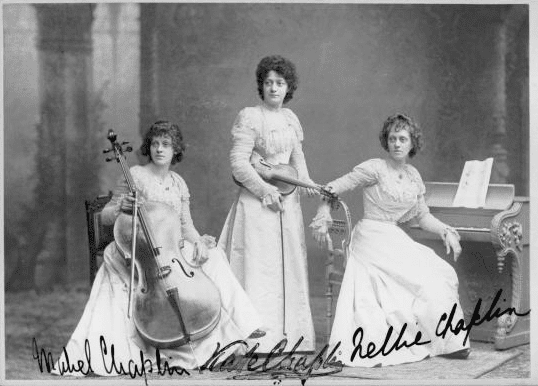
Nellie, Kate, and Mabel Chaplin were born into a well-off London family and showed musical talent from a young age. Their parents enrolled them in the London Academy of Music, where they honed their skills before continuing their education abroad.
- Nellie studied piano with Deppe in Hamburg.
- Mabel trained under cellist Eduard Jacobs in Brussels.
- Kate learned from Belgian violinist and composer Eugène Ysaÿe.
Each sister also mastered unique instruments like the harpsichord, viola d’amore, and viol. They incorporated these skills into their theatrical performances.
In 1893, Nellie and Kate had the honour of performing for Queen Victoria, who was so impressed by their talent that she gifted them jewellery adorned with diamonds, rubies, and pearls.
The Chaplins were ambitious and successful. They often collaborated with female musicians in local quartets and quintets, a choice driven by their exclusion from many male-dominated professional opportunities.
By the early 20th century, the Chaplin sisters had gained widespread fame for their chamber music performances. They organised over 183 concerts across Britain and abroad, showcasing their talents alongside other female musicians.
The Chaplin Sisters in Manchester
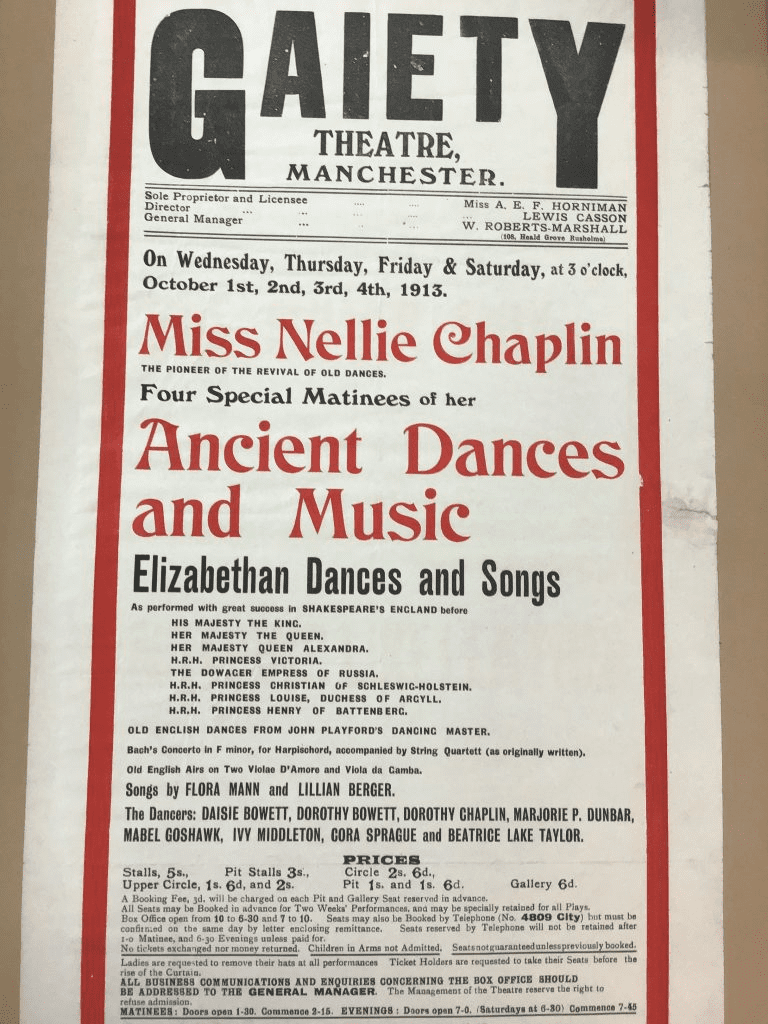
Though London was their home, the Chaplin sisters frequently visited Manchester. Their first performance in the city was in 1910 at the Gaiety Theatre, where Nellie and her all-female ensemble introduced the audience to revived historic dances. Their repertoire included the Sarabande, Courante, Coronto, Gigue, Bourrée, and La Volta, taking spectators on a journey through the history of theatre. The performance received thunderous applause and captivated the Manchester audience.
In 1913, the Chaplins returned to the Gaiety Theatre for another celebrated performance that further solidified their reputation in the city.
At the time, Manchester was not just a bustling industrial hub but also a centre for cultural, political, and social change. The city was the birthplace of the suffragist movement, making it an ideal venue for the Chaplins’ revolutionary performances. Their shows were more than entertainment—they were statements challenging societal norms. They inspired women to fight for their rights and became symbolic of the era’s broader struggles for gender equality.
The Suffragist Influence on the Chaplin Sisters
Having faced discrimination and inequality from a young age, the Chaplins were already aware of the challenges women faced. Their connection to the suffragist movement deepened after meeting activists in the campaign for women’s suffrage.
One key influence was Mary Neal, a revivalist of traditional dances and a suffragist who performed alongside them. The sisters’ commitment to women’s rights was evident not only in their performances but also in their choice of collaborators. When hiring new members for their ensembles, they prioritised women, supporting their careers, creative growth, and the suffrage cause.
The Chaplin sisters were pioneers in the performing arts, forming one of the first all-female ensembles in Britain. Their performances blended music, theatre, and political advocacy, resonating deeply with audiences, especially women. They used their platform to highlight the fight for women’s suffrage, making their performances a powerful vehicle for change.
In Manchester, their impact was profound. Their appearances at the Gaiety Theatre were landmark events, drawing large crowds and significant media attention. Their work not only captivated audiences but also elevated public and political awareness of the suffragist movement.
Sources
- https://www.manchestertheatrehistory.co.uk/2019/10/25/first-girl-band-or-is-it-girl-power-at-the-gaiety-theatre-1910/
- https://www.semibrevity.com/2017/11/lady-pioneers-who-popularized-early-music-in-britain-at-the-beginning-of-the-20th-century/
- https://www.sophie-drinker-institut.de/chaplin-schwestern
- https://manchesterhistory.net/manchester/gone/gaiety.html