


The city of Manchester boasts a rich cultural and theatrical history, filled not only with triumphs but also with tragic moments. One such moment was the untimely death of Spanish opera singer Maria Malibran, who passed away on stage at the Royal Theatre. Next on manchester-trend.
A Little About Maria Malibran
Maria Malibran was one of the most renowned opera singers of the 19th century. Known for her powerful voice, deeply emotional performances, and unwavering dedication to her craft, she became a legend. Born in Paris in 1808 to a musical family—her father was a famous tenor, and her brother a celebrated composer—Malibran began her musical training at a young age. Her natural talent for singing captivated audiences across Europe in the early 19th century.
Malibran’s career started early, performing on the stages of Naples with her father, singing in London theatres, and playing in various productions worldwide. She even had the privilege of performing on some of the most prestigious stages in New York. By the 1830s, she moved to the United Kingdom, where she performed extensively in London and toured the country.
Maria Malibran’s Visit to Manchester
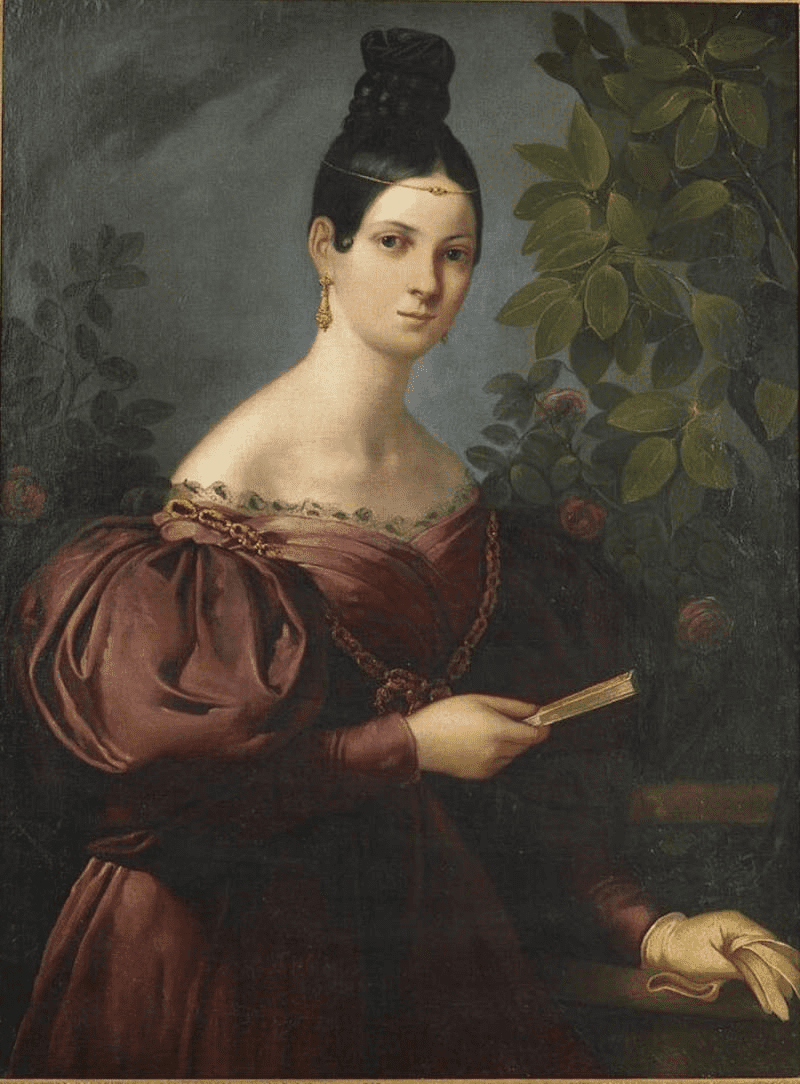
By the time Maria Malibran arrived in Manchester in 1836, she was already an international star, celebrated across Europe’s grand opera houses. Her visit to Manchester was a highly anticipated event, and her performance at the Royal Theatre drew a large and eager audience.
Earlier that year, however, Malibran suffered a serious injury after a fall from a horse, leaving her with severe trauma. Refusing medical treatment, she continued her tour of the UK. This injury led to complications, including an acute subdural haematoma. Despite her condition, she travelled to Manchester in the autumn to perform at the Royal Theatre on Fountain Street.
On 23 September 1836, during her much-awaited performance at the Royal Theatre, Malibran suddenly fainted on stage. The audience watched in shock as the iconic singer collapsed. Although her personal doctor urged immediate treatment, she declined and insisted on participating in a church performance scheduled for the following day. Tragically, Malibran did not survive the night.
Her untimely death turned what was meant to be a celebrated event into a day of mourning for Manchester. Following a public funeral, her body was temporarily buried in a Manchester church before being transferred to a mausoleum at Laeken Cemetery near Brussels.
The Unique Voice of Maria Malibran
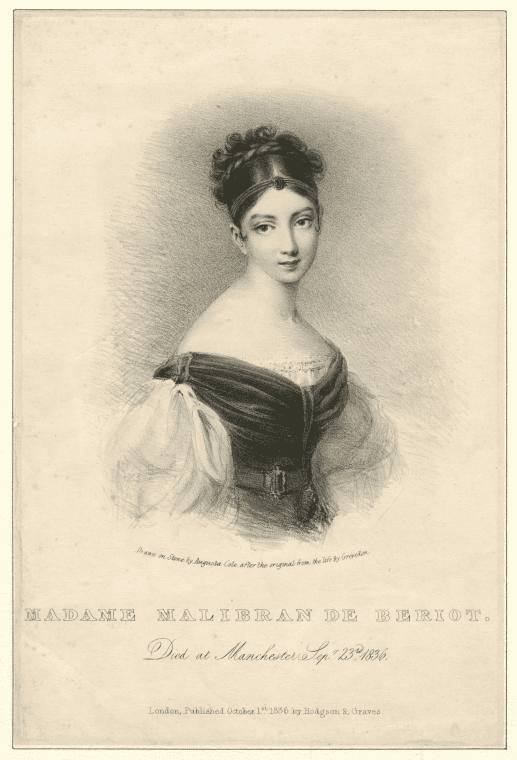
Maria Malibran’s vocal range was extraordinary, spanning from E♭ below middle C to the highest C and D. This allowed her to effortlessly perform roles requiring both contralto and soprano parts. Her voice and performances captivated composers such as Rossini, Donizetti, Mendelssohn, Chopin, and Liszt, who became some of her most ardent admirers.
However, critics were divided. While French critic Castil-Blaze praised her vibrancy and expressiveness, Eugène Delacroix criticised her for lacking refinement and pandering to popular tastes.
Maria Malibran’s Legacy
Despite her short career, Malibran performed approximately 30 roles in various cities worldwide. Her impact on the world of opera is still celebrated:
- A theatre in Venice bears her name.
- The Maria Malibran Foundation in Brussels preserves her legacy, including collections of scores, documents, and personal items.
- Several films have been made about her life and career.
Maria Malibran’s exceptional talent and tragic end left an indelible mark on the history of opera. The Royal Theatre in Manchester, where she gave her final performance, remains a symbol of her dramatic and poignant legacy.