


As you know, 18-19th-century Manchester was a city with a rapidly developing industry. In fact, it existed thanks to the emergence of new cotton factories. Thus, the cotton industry and cotton trade were the city’s driving force for several centuries. Undoubtedly, other areas of urban life developed too. Operas, theatres, galleries and other cultural institutions appeared in Manchester. One of them was the Royal Exchange, a famous trading spot during the industrial boom, which in the 20th century turned into a cultural landmark, The Royal Exchange Theatre. Learn more at manchester-trend.
The Royal Exchange in Manchester
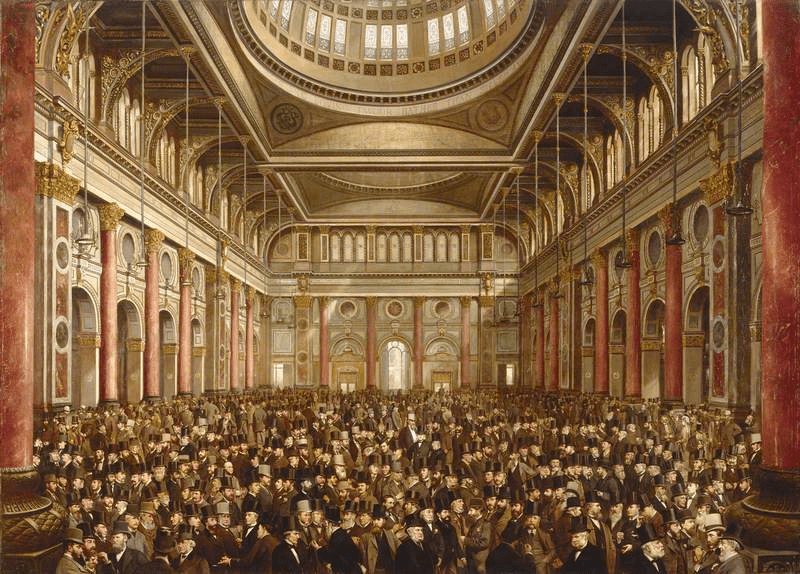
Every modern resident of Manchester knows about the outstanding building of the Royal Exchange. Today, it serves as a venue for various shows and theatrical performances. This place is a cultural centre of the city, but it used to have a completely different direction of activity.
The Royal Exchange was designed at the beginning of the 19th century. It was a semi-circular building in a classical style. It had an exchange hall for traders’ activities, as well as a spacious library with more than 15,000 copies of books. Also, there was a newsroom and a dining room nearby. The first building of the Royal Exchange was officially opened in 1809.
As the cotton industry rapidly grew in the city, the need for larger trading premises increased too. Therefore, the building of the Royal Exchange was expanded in 1849.
Another expansion of the Royal Exchange building took place in the 1860s and 1870s. The exchange needed more space for traders and brokers to strike deals on trading days. It supported the jobs of tens of thousands of textile workers in Manchester and surrounding cities.
Trading at Manchester’s Royal Exchange continued for many decades. It suffered significant losses during the Second World War when the Nazis dropped a bomb directly on the building. Of course, after that, the exterior and interior of the stock exchange were completely rebuilt, and trading continued there until 1968. Then a question about its demolition arose in the city.
How did the famous Manchester Stock Exchange turn into a theatre?
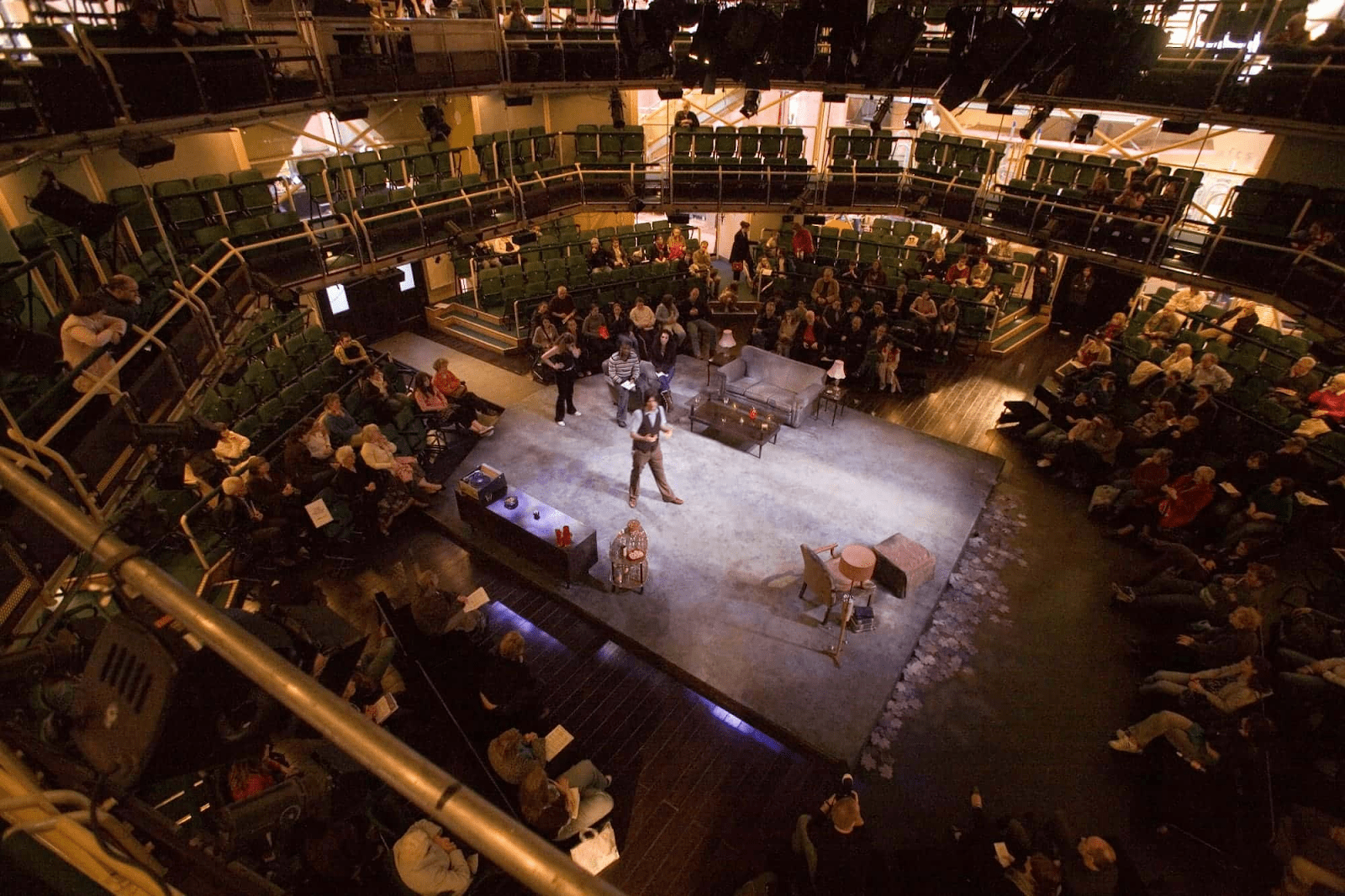
The Royal Exchange building remained empty for five long years after 1968. It wasn’t demolished because it was of historical and cultural value. Instead, it accommodated a theatre group called 69 Theatre Company. The Royal Exchange Theatre was founded on the site of the old stock exchange, with hundreds of daily transactions, in 1976. The theatre had six artistic directors:
- Michael Elliott
- Caspar Wrede
- Richard Negri
- James Maxwell
- Braham Murray
- and Gregory Hersov.
The theatre functioned successfully and received guests. Many famous performances and shows were staged here. However, a tragedy befell the theatre in 1996 when on June 15, an IRA bomb was detonated on Corporation Street, almost 50 yards from The Royal Exchange Theatre.
The strong explosion displaced the dome but the main structure of the building wasn’t damaged. Renovations lasted for two long years. Meanwhile, the theatre troupe temporarily performed in Castlefield.
The Royal Exchange Theatre reopened in 1998. The new building acquired a second performance hall, a studio, a bookshop, craft workshop, corporate reception space and even a restaurant and bar.
The first play staged on the day of the theatre’s reopening in 1998 was Hindle Wakes by the famous English playwright Stanley Houghton. Interestingly, this very production was supposed to be shown at the Royal Exchange on the day of the IRA bomb explosion.
Famous theatrical performances and performers at the Royal Exchange
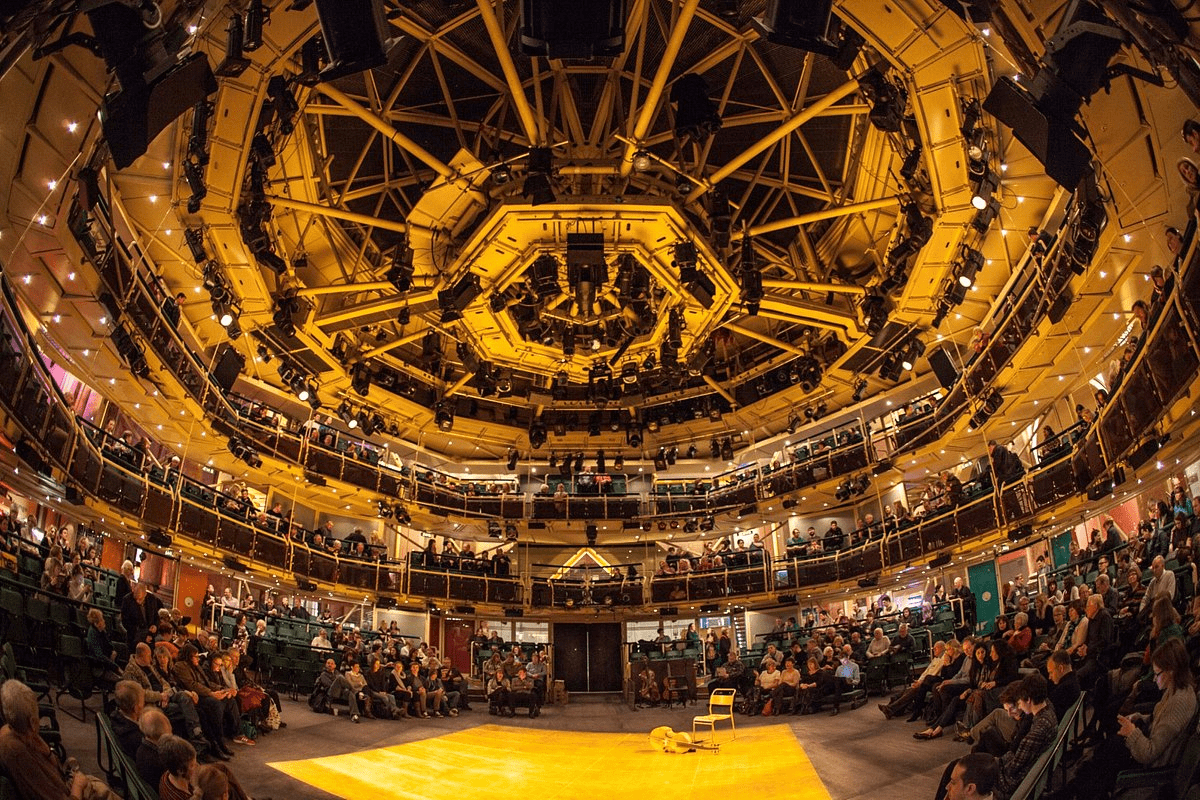
Since 1998, the Royal Exchange Theatre has given an average of about 350 performances a year. Its troupe often travels around England and gives performances in different cities.
At the Royal Exchange Theatre, you can enjoy classical and Renaissance productions, modern drama and even the latest performances. Some of the most popular ones are by Shakespeare, Ibsen and Chekhov. For many years, they have underlain the repertoire of the Royal Exchange Theatre.
Its most famous performances include
- La Ronde
- The Lower Depths
- Don Carlos
- The Dybbuk or Between Two Worlds
- The Dresser
- Amongst Barbarians
- and others.
Theatre companies from other cities and countries frequently perform in the Royal Exchange Theatre. Folklore, jazz and even rock concerts, discussion evenings and literary events are very often held here too. Undoubtedly, the Royal Exchange went through a difficult path of formation and development. In the 21st century, the theatre is considered a historical and cultural centre of Manchester, which attracts residents and visitors to the city of all ages.